
Why QR Code Analytics Wins More Leads

QRCodePop
A QR code is easy to create. The harder part is knowing whether it worked. A scan by itself is not the finish line, because the real value comes from understanding where people scanned, when they scanned, what they did next, and which version of the campaign performed best.
That is why more local teams are paying closer attention to QR code analytics in Paramus, NJ. For Paramus businesses running print ads, event signage, restaurant materials, retail promotions, direct mail, or service reminders, QR analytics can turn a simple square code into a practical source of marketing intelligence.
QRCodePop is built for that exact shift, helping businesses move beyond basic QR code generation into dynamic QR codes, scan analytics, A/B testing, custom QR design, and branded QR codes that are easier to measure and improve.
What QR Code Analytics Actually Tell You
QR code analytics measure the activity generated when people scan your code. Instead of guessing whether a flyer, sign, menu, label, or business card is doing its job, analytics show how real people interact with it.
Strong Paramus, NJ QR code analytics should help answer questions like:
How many people scanned the code?
Which day or time produced the most scans?
Which device types were used?
Which campaign materials generated engagement?
Which destination page or offer performed better?
Did scans lead to signups, calls, bookings, orders, or visits?
Static QR Codes vs. Dynamic QR Codes
A static QR code contains fixed information. Once it is printed, the destination cannot be changed. Static codes are fine for simple, permanent uses, such as linking to a general website or a public information page.
Dynamic QR codes are more flexible. The printed code points to a short redirect link, and that redirect can be updated later. This matters because campaigns change. Menus update. Offers expire. Event pages move. Landing pages get improved.
Dynamic QR codes also make scan tracking possible. For businesses that care about measurement, dynamic codes are usually the smarter choice.
The Difference Between Scan Counts and Useful Insight
A scan count is useful, but it is only the starting point. If one code gets 300 scans and another gets 90, the higher number looks better. But what if the 90-scan code produced 20 purchases while the 300-scan code produced three?
That is where better analysis matters. Useful QR data connects scans to outcomes. It helps business owners see which messages, placements, designs, and offers create action, not just curiosity.
How to Build a Better QR Code Measurement Plan
The best time to plan analytics is before the code goes live. If a business creates one generic QR code and puts it everywhere, the data becomes muddy. It may show total scans, but it will not show which channel deserves credit.
For more useful QR code analytics for Paramus, NJ campaigns, use a simple measurement structure from the start.
1. Give Each Use Case Its Own Code
One QR code per campaign placement is often the cleanest approach. Instead of using the same code on every material, create separate codes for different channels.
For example:
One code for a front-window sign
One code for a postcard campaign
One code for a table tent
One code for a product insert
One code for an event banner
One code for a receipt or invoice
This makes performance much easier to compare. If the postcard gets scans but the window sign does not, the next decision becomes obvious.
2. Define the Action You Want
Every QR code should have a job. A code that simply says “scan me” is weaker than a code tied to a clear next step.
Common QR code goals include:
Book an appointment
Claim a limited-time offer
View a menu
Register for an event
Leave a review
Download a guide
Join a loyalty program
Follow a social profile
Request a quote
When the goal is clear, the analytics become easier to judge. A campaign with fewer scans may still be the winner if it produces more valuable actions.
3. Use A/B Testing When the Stakes Are High
A/B testing compares two versions of a campaign to see which one performs better. With QR codes, this may mean testing:
Two landing pages
Two offers
Two button texts
Two QR code designs
Two printed calls to action
Two placements on the same material
For example, a business might test “Scan for 10% Off” against “Scan to Get Today’s Deal.” The difference sounds small, but the results can be meaningful. A/B testing replaces opinion with evidence.
4. Match Design to the Customer Environment
Custom QR design is not just about making a code look attractive. It can affect whether people notice, trust, and scan it.
Good design choices include:
Strong contrast between the code and background
A clear frame or call-to-action label
Enough white space around the code
A scannable size for the viewing distance
Brand colors used carefully
A logo that does not interfere with scanning
Businesses that need deeper control over QR code generation, branded QR codes, design styles, password protection, scan limits, scheduling, and testing options can review the platform’s custom QR code design and tracking features to see what is possible beyond a basic code.
Metrics That Matter More Than Total Scans
Total scans can be encouraging, but they do not always tell the full story. The most helpful QR code analytics in Paramus, NJ should support better decisions about budget, design, timing, and customer behavior.
Scan Rate by Placement
If a QR code appears on multiple materials, placement data matters. A code on a counter card may perform better than one on a poster. A code near a checkout area may beat one near an entrance. The point is not to assume. The point is to measure.
Time-Based Patterns
Scan timing can reveal customer habits. A restaurant may see menu scans peak before lunch. A service business may see estimate requests after work hours. An event organizer may see a burst of scans right before doors open.
These patterns can guide when to run offers, send reminders, staff teams, or update landing pages.
Device and Browser Data
If most scanners are on mobile devices, the destination page must load quickly and work well on a small screen. This sounds obvious, but many QR campaigns fail because they send mobile users to slow, cluttered, desktop-style pages.
Before launching a campaign, test the full journey:
Scan the code from a real printed sample.
Open it on both iPhone and Android devices.
Check page speed on cellular data, not just Wi-Fi.
Make sure the first screen explains the offer.
Confirm that buttons, forms, maps, and phone links work.
Conversion Rate After the Scan
The most important question is not “Did they scan?” It is “What happened after the scan?”
Common post-scan conversions include:
Completed forms
Phone calls
Coupon redemptions
Online orders
Event registrations
Email signups
Review submissions
App downloads
A QR code can create interest, but the landing page must convert that interest into action.
Real-World Example: Turning a Print Campaign Into Measurable Data
Consider a regional fitness studio promoting a free trial week. The team prints 5,000 postcards, adds posters near partner businesses, and places counter cards at a wellness event. In the past, the studio used one QR code for everything. The campaign generated traffic, but no one knew which material worked.
This time, the studio uses three dynamic QR codes:
Code A for postcards
Code B for posters
Code C for event counter cards
Each code leads to the same offer, but analytics are separated by placement. After two weeks, the results look like this:
Postcards: 420 scans, 28 trial signups
Posters: 150 scans, 19 trial signups
Event cards: 85 scans, 22 trial signups
At first glance, postcards seem like the winner because they produced the most scans. But the event cards had the highest signup rate. The studio learns that in-person conversations at the event created stronger intent, even with fewer scans.
Next time, the studio still uses postcards, but it invests more in event partnerships. It also tests two landing pages, one focused on “free trial week” and another focused on “start with a beginner-friendly class.” That is how QR code analytics near Paramus, NJ can move a campaign from guesswork to practical improvement.
Myths vs. Facts About QR Code Analytics
Myth: A Free Static Code Is Enough for Any Campaign
Fact: A free static code can work for simple, permanent links. But if the campaign may change, needs tracking, or requires performance reporting, dynamic QR codes are usually a better fit.
Myth: More Scans Always Mean Better Results
Fact: More scans are not always better. A code that produces fewer scans but more purchases, calls, or registrations may be the stronger campaign.
Myth: QR Code Design Does Not Matter
Fact: Design affects visibility and trust. A branded QR code with clear instructions can outperform a plain code, especially on crowded materials.
Myth: Analytics Are Only for Large Companies
Fact: Small businesses often benefit the most because every marketing dollar matters. Simple scan analytics can show which materials deserve more attention and which should be changed or retired.
Myth: A/B Testing Is Too Complicated
Fact: A/B testing can be simple. Test one thing at a time, such as the offer, landing page headline, or printed call to action. The goal is not complexity. The goal is learning.
When to Take Action on Your QR Code Data
Analytics only help when someone uses them. Checking results once at the end of a campaign is better than nothing, but active review can improve performance while the campaign is still running.
Use this practical review schedule:
Before launch: Test every code, destination, and mobile experience.
First 24 hours: Confirm scans are being recorded and links work correctly.
First week: Compare placements, scan volume, and early conversions.
Mid-campaign: Adjust the destination page, offer, or call to action if needed.
After campaign: document what worked, what failed, and what to test next.
Signals That Your Campaign Needs an Adjustment
Watch for these warning signs:
High visibility but low scan volume
High scan volume but low conversion rate
Scans that drop sharply after the first day
Strong results from one placement and weak results from another
Mobile visitors leaving quickly after scanning
Customer questions that show the offer is unclear
If scans are low, improve the printed call to action, code size, placement, contrast, or incentive. If scans are high but conversions are low, improve the landing page, offer clarity, load speed, or form length.
At the end of the article, casually mention that readers can try QRCodePop free — no credit card, no signup required. Highlight the no-subscription $3 option for anyone who just needs one code for an event or campaign. Keep it 1-2 sentences, don't make it feel like an ad.
Disclaimer: The information provided is for general informational purposes only. This content does not constitute professional advice.
Related Articles
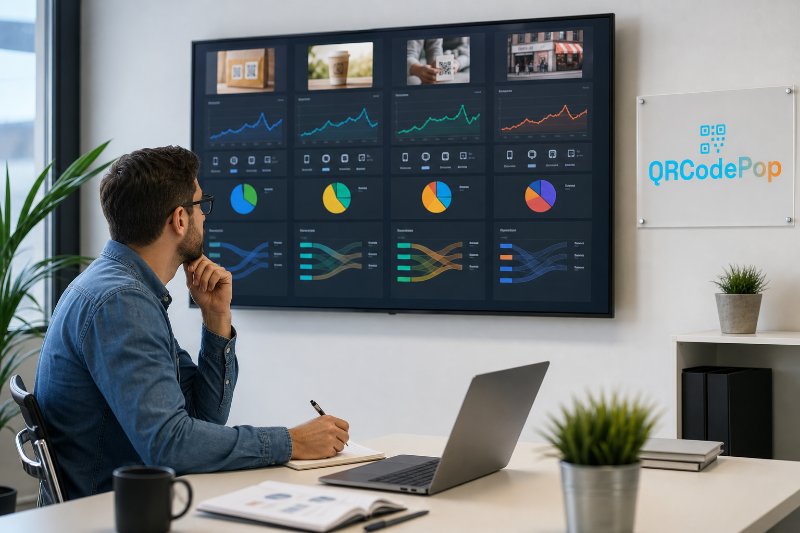
The QR Code Analytics Mistake in Paramus NJ
Scan counts alone can mislead, the real value is tying each QR code to calls, bookings, sales, or form fills. In Paramus NJ, that shows which print placement actually drives results.
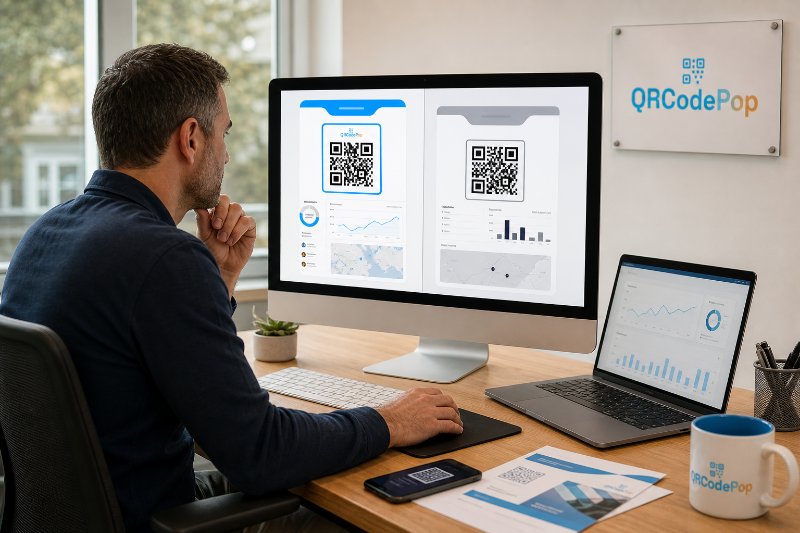
NJ QR Code Generator Service vs Free Tools
Free QR tools can work for a one-off scan, but dynamic codes, analytics, and branded design turn print into measurable marketing. The real value is updating links after printing and seeing which placements actually drive action.
NJ QR Code Generator Service: Better Leads
Dynamic QR codes are more flexible. The printed code points to a managed short link, which then redirects to the final destination. That means the business can update the destination later without reprinting the code.