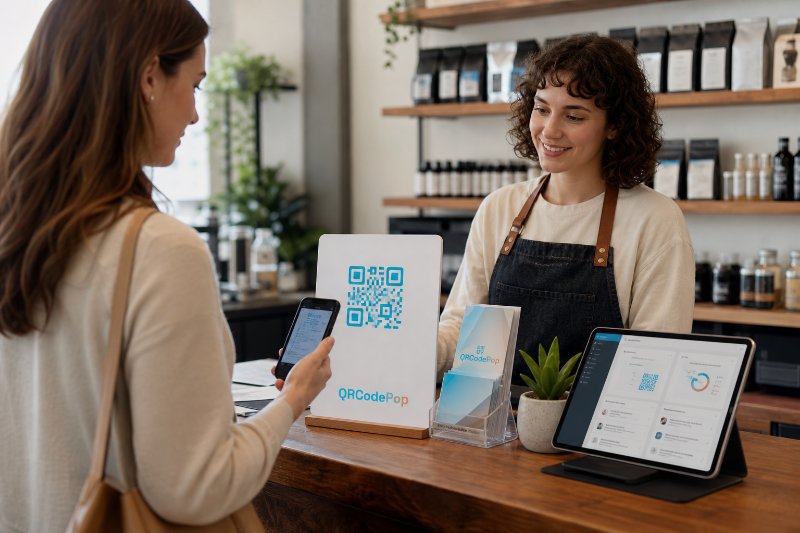
Set Up Social Media QR Codes Paramus Today

QRCodePop
A customer sees your counter sign, postcard, product label, event banner, or receipt insert. They are interested, but they are not going to type your Instagram handle by hand. They may not search for your TikTok, LinkedIn, Facebook, YouTube, or review profile either. A well-planned QR code removes that friction and turns a quick moment of attention into a follow, message, review, booking, or purchase. That is why social media QR codes in Paramus are becoming more useful for local businesses that rely on both foot traffic and online engagement. QRCodePop, based in Paramus, New Jersey, helps businesses create scannable paths from offline materials to social profiles, campaigns, and trackable landing pages without making the process complicated. The key is not simply placing a code on a sign. The real value comes from choosing the right destination, designing the code so people trust it, tracking scans, and improving the campaign over time. This guide walks through how to plan, build, and measure social media QR codes so they do more than look modern.
What Social Media QR Codes Actually Do for a Business
A social media QR code is a scannable shortcut that sends someone to a social profile, social landing page, review prompt, video, campaign page, or multi-link hub. Instead of asking people to search for your brand, the code brings them directly to the next action. For companies using social media QR codes in Paramus, the most common goals include:
Growing followers on Instagram, TikTok, Facebook, LinkedIn, YouTube, or Pinterest
Sending event attendees to a live campaign page
Encouraging customers to leave reviews
Promoting a limited-time offer
Connecting print ads to social content
Driving users to a contest, giveaway, or lead form
Measuring which offline materials produce the most engagement
Static vs. Dynamic QR Codes
Static QR codes point to one fixed destination. Once printed, the link cannot be changed. They are fine for simple, permanent uses, such as linking to a main Instagram profile. Dynamic QR codes are more flexible. The printed code stays the same, but the destination can be updated later. This matters when campaigns change, platforms shift, or a business wants to test different offers. Dynamic QR codes are especially helpful for social campaigns because they allow businesses to:
Change the destination after printing
Track scans by time, device, or general location
Pause or redirect a campaign
Use A/B testing to compare destinations
Avoid reprinting materials when a link changes
Why Scan Analytics Matter
A QR code without scan analytics only tells you that the code exists. A trackable code tells you whether it is working. Scan analytics can help answer practical questions:
Which poster, flyer, or table card gets the most scans?
What days and times create the highest engagement?
Are customers scanning from phones or tablets?
Did the campaign attract interest but fail to convert?
Should the code link to Instagram, a review page, or a special offer?
This turns a QR code from a design element into a marketing tool.
How to Build a Better Social QR Campaign
A strong Paramus social media QR code strategy starts before the code is generated. The business should know what action it wants the scanner to take and why that action matters.
1. Choose One Primary Goal
Trying to do too much with one code weakens the campaign. A person who scans should immediately understand the next step. Good campaign goals include:
“Follow us for weekly specials”
“Watch the demo video”
“Join the giveaway”
“Leave a review”
“Book through our profile”
“Message us for a quote”
“See the event schedule”
Avoid vague prompts like “Scan me” with no context. People scan when they know what they will get.
2. Pick the Right Destination
The best destination depends on the moment. A restaurant table tent may work best with Instagram or a review page. A trade show banner may work better with LinkedIn or a lead form. A product package may need a video tutorial or TikTok campaign page. Options include:
A single social profile
A multi-link social landing page
A campaign-specific landing page
A video or playlist
A review request page
A direct message link
A coupon or loyalty signup page
For social media QR codes for Paramus campaigns, a dynamic destination is often safer because the business can adjust later without wasting printed materials.
3. Use Custom QR Design Without Hurting Scannability
A custom QR design can make the code feel more polished and trustworthy. But design should never make the code harder to scan. Useful design choices include:
Brand colors with strong contrast
A clear frame or call-to-action
A centered logo that does not block the code
Enough white space around the code
A short instruction line
Proper sizing for the viewing distance
Branded QR codes can help customers recognize that the code belongs to the business, which may increase trust. Just keep contrast high and test before publishing. Businesses that want more control can review the platform’s custom QR design and campaign features, including multiple QR types, design styles, A/B testing, password protection, scan limits, and scheduling.
4. Test the Code in Real Conditions
Testing on a desktop screen is not enough. Scan the code the way customers will scan it. Before printing or publishing, check:
Does it scan from the expected distance?
Does it work under indoor and outdoor lighting?
Does it load quickly on mobile data?
Is the destination mobile-friendly?
Is the call-to-action clear?
Does the social app open correctly when installed?
Does the fallback browser experience still work?
If the code is going on packaging, menus, apparel, or outdoor signage, test it on the actual material whenever possible.
Practical Placement Ideas That Increase Scans
Even the best code fails if people do not notice it or do not understand why they should scan. Placement should match customer behavior.
High-Intent Places to Use Social QR Codes
The strongest placements are where the customer already has interest or time. Consider placing codes on:
Receipts and checkout signs
Table tents and menus
Event badges and booth signage
Product packaging and inserts
Direct mail pieces
Appointment cards
Window decals
Vehicle graphics
Flyers, posters, and postcards
Thank-you cards
Printed proposals or leave-behinds
A code near a checkout counter might ask for a follow or review. A code on packaging might invite a customer to watch a setup video. A code on an event banner might lead to a live giveaway.
Call-to-Action Examples That Work
The words around the code matter. A strong call-to-action explains the benefit in a few words. Examples include:
“Scan for today’s special”
“Follow us for new arrivals”
“Watch the 30-second demo”
“Join the giveaway”
“Leave a quick review”
“See behind-the-scenes updates”
“Scan for event photos”
“Message us on Instagram”
“Get the coupon before you leave”
Avoid placing a code alone with no explanation. Customers are more likely to scan when the value is obvious.
When to Use A/B Testing
A/B testing means comparing two versions to see which performs better. With QR codes, that could mean testing two destinations, two designs, or two calls-to-action. For example:
Version A links to Instagram, Version B links to a coupon page
Version A says “Follow us,” Version B says “Scan for 10% off”
Version A uses a black-and-white design, Version B uses branded colors
Version A appears near the entrance, Version B appears near checkout
A/B testing is most useful when a campaign has enough traffic to make the results meaningful. If only five people scan, do not overreact. If hundreds scan, patterns become more useful.
Myths vs. Facts About Social Media QR Codes
Social QR campaigns are simple to launch, but several misconceptions still lead to weak results.
Myth 1: “Any Free QR Code Is Good Enough”
Fact: A free static code may be enough for a permanent profile link, but it may not be enough for a campaign. If the link changes or the campaign needs tracking, dynamic QR codes are usually the better option.
Myth 2: “People Will Scan Just Because the Code Is There”
Fact: People scan when the benefit is clear. The code needs a reason, such as a discount, video, review prompt, giveaway, or useful information.
Myth 3: “Social Media QR Codes Are Only for Retail”
Fact: They work across many industries, including professional services, restaurants, schools, nonprofits, real estate, healthcare offices, fitness studios, events, and home services.
Myth 4: “Design Does Not Matter”
Fact: Design affects trust and attention. Custom QR design and branded QR codes can improve recognition, but scannability still comes first.
Myth 5: “Scan Counts Tell the Whole Story”
Fact: Scan counts are only the start. A campaign should also consider timing, placement, follow-through, and whether the destination page achieved the desired action.
A Real-World Example: Turning Event Traffic Into Social Engagement
Imagine a local service business setting up a booth at a weekend community event. The team wants more Instagram followers, but it also wants qualified leads. Instead of printing only a social handle on the banner, the business creates a dynamic QR code that leads to a mobile landing page with three options:
Follow the business on Instagram
Enter a giveaway
Request a quote
Watch a short service explainer video
The printed sign says, “Scan to enter the giveaway and see event-only offers.” This gives people a clear reason to scan. The business uses scan analytics after the event and notices:
Most scans happened between 12 p.m. and 2 p.m.
The giveaway button received more taps than the Instagram follow button
The video had fewer clicks but better lead quality
The table card outperformed the large banner
A second version of the call-to-action generated more scans
For the next event, the business adjusts the campaign. The code stays the same because it is dynamic, but the destination changes. The new landing page puts the giveaway first, moves the quote request higher, and uses a shorter video. The business also prints more table cards because that placement performed better. This is the practical advantage of combining QR code generation, scan analytics, A/B testing, and dynamic links. The campaign improves based on actual behavior, not guesswork.
Disclaimer: The information provided is for general informational purposes only. This content does not constitute professional advice.
Related Articles

Why QR Code Analytics Wins More Leads
QR code analytics turns a printed code into measurable marketing, showing which campaigns bring the most scans, leads, and sales. Dynamic codes add the extra advantage, letting Paramus businesses update destinations and compare results without reprinting.
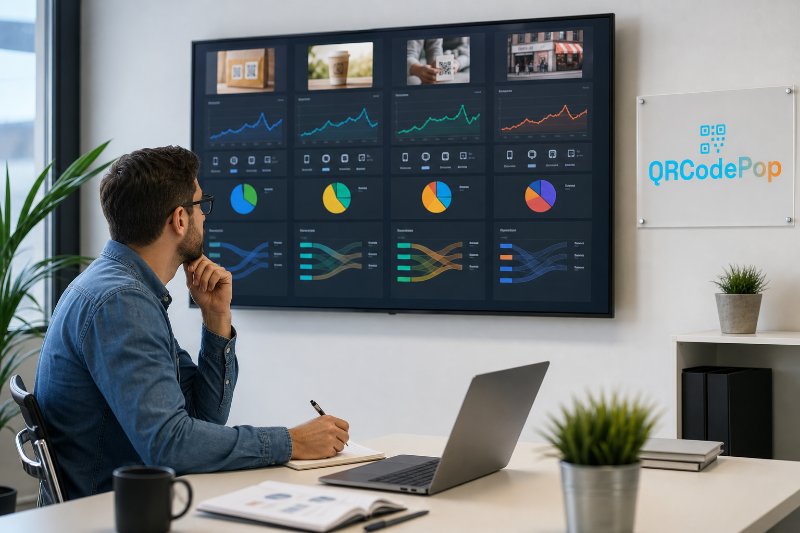
The QR Code Analytics Mistake in Paramus NJ
Scan counts alone can mislead, the real value is tying each QR code to calls, bookings, sales, or form fills. In Paramus NJ, that shows which print placement actually drives results.
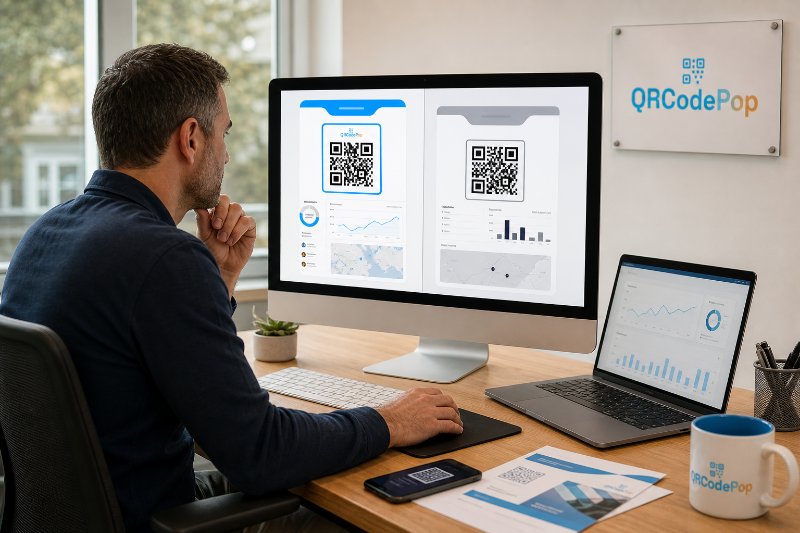
NJ QR Code Generator Service vs Free Tools
Free QR tools can work for a one-off scan, but dynamic codes, analytics, and branded design turn print into measurable marketing. The real value is updating links after printing and seeing which placements actually drive action.