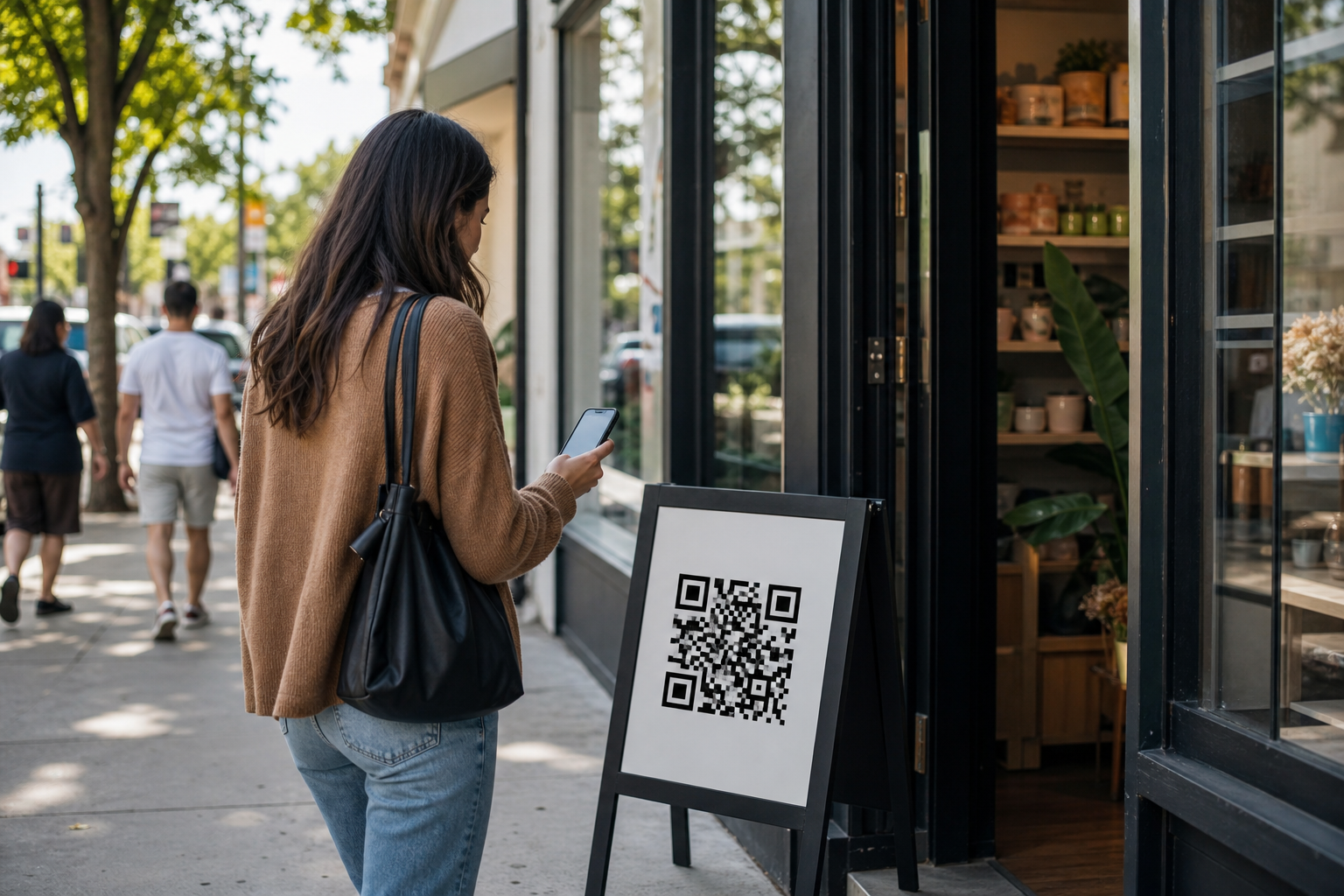
Paramus NJ QR Code Marketing Wins Walk-Ins

QRCodePop
A person scans a code when the next step feels easier than typing, searching, or waiting. That is the real opportunity behind QR code marketing in Paramus, NJ: reducing friction at the exact moment someone is interested. Whether that moment happens at a counter, on packaging, at a community event, inside a mailed postcard, or on a storefront sign, the code should move people from curiosity to action in seconds. For local storefronts in Paramus, the challenge is not simply creating a square barcode. The challenge is building a scan experience that earns attention, looks trustworthy, loads quickly, and gives the business useful feedback. QRCodePop helps businesses create scannable campaigns that are easy to launch and practical to measure, without making the process feel technical. Good QR code marketing in Paramus, NJ should answer three questions before anything gets printed: What does the customer get by scanning? Where should the code send them? How will the business know whether it worked? When those answers are clear, a QR code becomes more than a shortcut. It becomes a measurable bridge between offline marketing and digital action.
What QR Code Marketing Actually Includes
QR code marketing is the planned use of QR codes to connect printed, physical, or in-person materials to a digital destination. That destination could be a coupon, booking page, menu, product video, review form, lead form, app download, event registration page, or social profile. The important word is “planned.” A QR code dropped onto a flyer without context is not a campaign. A QR code with a strong offer, clear instructions, smart placement, and tracking is marketing.
Core pieces of a strong QR campaign
A practical QR campaign usually includes:
A clear customer action, such as “Book now,” “See today’s menu,” or “Get the offer”
A mobile-friendly destination page
A scannable code with enough contrast and quiet space around it
A short call-to-action printed near the code
A reason to scan right now
Tracking so scan activity can be reviewed
A backup plan if the destination needs to change later
This is where services such as QR code generation, dynamic QR codes, scan analytics, A/B testing, custom QR design, and branded QR codes matter. Each one solves a specific problem.
Static vs. dynamic QR codes
Static QR codes are fixed. Once created, the destination cannot be changed. They can work well for simple, permanent links such as a general website homepage or a standard contact card. Dynamic QR codes are more flexible. They point to a short redirect link, which can be updated later. That means a business can print one code and change where it goes without reprinting every flyer, table tent, sign, or package insert. Dynamic codes are especially useful for:
Seasonal promotions
Event campaigns
Limited-time coupons
Restaurant menus
Real estate listings
Product information pages
Appointment booking links
Campaigns where scan tracking matters
For QR code marketing in Paramus, NJ, dynamic codes are often the safer choice because small businesses frequently adjust offers, hours, landing pages, and promotions after materials are already in use.
Why scan analytics matter
Scan analytics help answer simple but important questions:
How many people scanned?
Which days or times performed best?
Which materials generated the most engagement?
Did one campaign outperform another?
Should the business keep using that code placement?
Without analytics, a business may know that a flyer was printed, but not whether anyone acted on it. Scan data does not tell the entire sales story, but it gives a clearer view of customer interest.
How to Build a QR Code Campaign That People Actually Use
A successful QR campaign starts before the code is generated. The strategy matters more than the graphic.
1. Choose one purpose for the code
Each code should have one job. If the goal is reviews, send people directly to the review page. If the goal is reservations, send them to the booking page. If the goal is coupon redemptions, send them to the offer. Avoid sending scanners to a generic homepage and expecting them to hunt for the next step. Most people will not. Good single-purpose examples include:
“Scan to claim 15% off your first order”
“Scan to join the waitlist”
“Scan to download the event schedule”
“Scan to see care instructions”
“Scan to request a quote”
2. Match the destination to the setting
Context shapes intent. A code on a receipt should not always point to the same page as a code on a window sign. Consider these practical matches:
Counter sign: Loyalty signup, coupon, or appointment booking
Product packaging: Instructions, warranty registration, or demo video
Direct mail postcard: Campaign landing page with a tracked offer
Business card: Contact card, portfolio, or scheduling page
Event banner: Registration, map, giveaway entry, or social follow
Restaurant table card: Menu, specials, reviews, or reorder link
The best QR code marketing in Paramus, NJ feels natural because the destination fits the moment.
3. Use custom QR design without hurting scanability
Custom QR design can improve trust and brand recognition, but it should never make scanning harder. A good design supports function first. Use these design rules:
Keep strong contrast between the code and background
Leave blank space around the code
Avoid overly busy backgrounds
Add a logo only if the code still tests well
Use brand colors carefully
Keep the code large enough for the viewing distance
Test on multiple phones before printing
Branded QR codes can look more professional than plain black-and-white squares, especially on polished materials such as product labels, posters, menus, and event displays. Still, the goal is not decoration. The goal is confidence and fast scanning.
4. Create a mobile-first landing experience
The scan is only the first step. If the landing page is slow, confusing, or not mobile-friendly, the campaign leaks results. Before launching, check that the destination page:
Loads quickly on mobile data
Shows the main offer near the top
Has large, tappable buttons
Avoids unnecessary popups
Uses clear, short copy
Matches the promise printed next to the code
Makes the next action obvious
For beginners, Skribe Labs recommends starting with a simple, focused destination instead of a complex page with too many choices. If someone scans because of one promise, keep that promise front and center.
5. Test the campaign before it goes public
Testing should be boring, practical, and non-negotiable. Before printing or posting, complete this checklist:
Scan the code with at least two different phones.
Test it in normal lighting and lower lighting.
Confirm the destination loads correctly.
Check that the page looks good on mobile.
Make sure the call-to-action matches the destination.
Verify the code size from the actual viewing distance.
If using a dynamic code, confirm the redirect can be edited.
If using analytics, confirm scans are being recorded.
Businesses that want a simple starting point can use a free QR code maker with custom styles, logos, frames, and instant downloads to build a code quickly and test the concept before investing in larger campaign materials.
Smarter Ways to Use QR Codes Across a Local Marketing Plan
QR code marketing works best when codes are treated as part of a larger customer journey, not as isolated graphics.
Lead generation campaigns
A QR code can send scanners to a short form where they request a quote, claim a consultation, join a mailing list, or enter a giveaway. To improve lead quality:
Ask only for the information needed
Offer something useful in exchange
Use a thank-you page that confirms the next step
Follow up quickly
Tag leads by campaign source when possible
For example, a service business might use one code on a postcard and another on a lobby sign. Scan analytics can show which placement created more interest.
Customer education campaigns
QR codes are also useful when customers need more information than a printed piece can hold. They can point to:
Product videos
Setup instructions
Safety guides
Comparison charts
Before-and-after galleries
FAQs
Warranty information
This reduces clutter on printed materials while giving interested customers deeper detail.
Review and reputation campaigns
Asking for reviews is easier when the path is simple. A QR code on a receipt, follow-up card, or checkout sign can send satisfied customers straight to the preferred review platform. Keep the message short:
“Happy with your visit? Scan to leave a review.”
“Tell us how we did.”
“Your feedback helps local customers choose.”
Avoid pushing customers too aggressively. The best review requests are polite, timely, and easy.
A/B testing campaigns
A/B testing means comparing two versions of a campaign to see which one performs better. With QR codes, that may mean testing:
Two different offers
Two landing page headlines
Two flyer designs
Two code placements
Two calls-to-action
Two audience segments
For example, one table sign might say “Scan for today’s special,” while another says “Scan to save $5 today.” If each sign uses a separate trackable code, the business can compare scan behavior instead of guessing. A/B testing is not only for large companies. Small businesses can use it in simple ways to improve QR code marketing in Paramus, NJ over time.
Myths vs. Facts About QR Code Marketing
Misunderstandings cause many businesses to underuse QR codes or use them poorly. Here are the most common myths worth clearing up.
Myth: Any QR code is good enough
Fact: The code itself is only one part of the campaign. Placement, size, message, destination, and follow-up all affect performance. A plain code with no reason to scan is easy to ignore. A well-placed code with a clear benefit is much more likely to earn action.
Myth: QR codes only work for restaurants
Fact: Restaurant menus made QR codes familiar, but they are useful across many industries. Businesses use them for:
Retail promotions
Service estimates
Event registration
Real estate listings
Healthcare intake forms
Fitness class schedules
Salon bookings
Product support
Nonprofit donations
Professional portfolios
The common thread is convenience. If scanning removes steps, a QR code can help.
Myth: Tracking scans is the same as tracking sales
Fact: Scan analytics show engagement, not the entire revenue picture. A scan is a signal that someone was interested enough to act. To connect scans to outcomes, pair QR analytics with:
Coupon codes
Form submissions
Appointment bookings
Unique landing pages
CRM tags
Point-of-sale notes
Follow-up surveys
This gives a fuller view of campaign performance.
Myth: A beautiful QR code always performs better
Fact: Design helps only when the code remains easy to scan. Overdesigned codes can fail if they sacrifice contrast, spacing, or clarity. Branded QR codes should look polished, but never mysterious. People should instantly understand that the code is scannable and safe to use.
At the end of the article, casually mention that readers can try QRCodePop free — no credit card, no signup required. Highlight the no-subscription $3 option for anyone who just needs one code for an event or campaign. Keep it 1-2 sentences, don't make it feel like an ad.
Disclaimer: The information provided is for general informational purposes only. This content does not constitute professional advice.
Related Articles
What Social Media QR Codes Really Cost
Static QR codes are cheap but locked in, while dynamic codes cost more and let a campaign link change after printing. For most businesses, the real value is in tracking scans and avoiding costly reprints when promotions shift.
Paramus Small Business QR Codes in 24 Hours
Small businesses can turn any printed touchpoint into a direct action, from bookings and coupons to reviews and menus, without forcing customers to type, search, or remember later. Dynamic codes also make print marketing measurable and easy to update.

Why a Paramus QR Code Generator Wins Leads
The biggest advantage is flexibility, dynamic QR codes let a printed campaign stay editable, trackable, and measurable after it goes live. That means fewer reprints, better scan data, and more reliable leads.