Marketing QR Codes: Boost Paramus Leads

QRCodePop
Customers move fast. They see a sign, receive a postcard, walk past a display, attend an event, or pick up a product, and the business has only a few seconds to turn that attention into action. That is where marketing QR codes in Paramus, NJ can be genuinely useful. They connect physical materials to digital next steps, so a scan can lead to a quote form, offer, video, review page, event registration, product guide, or payment link. For small businesses, the real value is not the square pattern itself. The value is what happens after the scan. A plain QR code can move someone from paper to a website. A better campaign can show which location, flyer, ad, package, or event actually produced interest. QRCodePop helps businesses create, customize, and measure those scan experiences without making the process complicated. In a competitive local market like Paramus, businesses do not need more random marketing activity. They need practical tools that help people act now and help owners see what is working. This guide explains how to plan, build, and improve QR campaigns that support real business goals.
How Marketing QR Codes Connect Offline Attention to Online Action
A QR code is often treated like a shortcut, but in marketing, it should be treated like a campaign entry point. The scan is the bridge between what someone sees in the real world and what the business wants them to do next. For teams evaluating marketing QR codes around Paramus, NJ, the best starting point is a simple question: what should happen after the scan? Common scan goals include:
Booking an appointment
Claiming a limited-time offer
Joining an email or SMS list
Viewing a product catalog
Downloading an event schedule
Opening a map location
Watching a short explainer video
Leaving a review
Registering for a class, demo, or consultation
Completing a quote request
Static vs. Dynamic QR Codes
Static QR codes point directly to a fixed destination. Once printed, the destination cannot be changed. They are fine for simple, permanent uses, such as a link to a homepage or a PDF that will never move. Dynamic QR codes are more flexible. The printed code points to a managed short link, and that short link can redirect to different destinations over time. This matters because printed materials are expensive to replace. Dynamic QR codes are helpful when you want to:
Update an offer after printing
Change a landing page for a seasonal campaign
Fix a mistake without reprinting
Track scans by campaign
Test different destinations
Pause or redirect a promotion after it ends
For marketing campaigns, dynamic codes usually make more sense because they protect the business from waste and give owners more control.
Why Scan Analytics Matter
Scan analytics show how people interact with the code. They do not magically explain everything, but they provide useful signals. Good scan analytics can help answer:
How many people scanned?
Which campaign generated the most scans?
What days or times performed best?
Which printed placement attracted attention?
Did a specific event or mailer produce activity?
Are scans increasing, dropping, or staying flat?
These numbers help business owners stop guessing. A campaign that feels busy may not be producing results. A small sign in the right place may outperform a large ad in the wrong one.
Building a QR Campaign That People Actually Scan
Creating the code is easy. Creating a reason to scan is the work. The strongest campaigns give people a clear benefit and make the next step feel simple.
Start With One Specific Outcome
Before choosing colors, shapes, or placement, define the purpose. One code should usually support one primary action. Use this planning process:
Choose the audience. Decide whether the code is for new customers, existing customers, event attendees, shoppers, patients, members, or leads.
Pick the action. Choose one main goal, such as “book a consultation” or “claim 10 percent off.”
Match the destination. Send scanners to the most relevant page, not a generic homepage.
Write the call-to-action. Tell people what they get by scanning.
Track the result. Use scan analytics and campaign labels so performance is easy to review.
Improve the weakest step. If scans are low, adjust placement or wording. If scans are high but conversions are low, improve the landing page.
A QR code should not feel like homework. If the customer has to guess why they should scan, most will not bother.
Use Better Calls-to-Action Than “Scan Me”
“Scan me” tells people what to do, but not why. Stronger wording gives a reason. Better examples include:
Scan for today’s offer
Scan to book your free estimate
Scan to see available appointment times
Scan for product details and warranty info
Scan to enter the giveaway
Scan to get the event map
Scan to compare service packages
Scan for setup instructions
The clearer the benefit, the higher the chance of a scan.
Make the Destination Mobile-Friendly
Most QR scans happen on phones. That means the landing page must load quickly and be easy to use on a small screen. Check for:
Fast page load speed
Large, readable text
Buttons that are easy to tap
Short forms
Clear headline
No distracting popups
A visible phone, booking, or purchase option
Content that matches the promise near the code
If the code says “Scan for a quote,” the page should not make people hunt through five menus to request one.
Design Choices That Improve Trust and Scan Rates
Design matters because QR codes often appear on physical materials where space is limited. A good design should be attractive, branded, and easy to scan.
Custom QR Design Without Hurting Usability
Custom QR design can make a campaign look more polished, especially on brochures, signs, packaging, and event materials. The key is balance. A QR code can include brand colors and visual styling, but it still needs enough contrast for phone cameras to read it quickly. Practical design tips include:
Use strong contrast between the code and background
Keep enough quiet space around the code
Avoid placing the code over busy images
Test the code from several distances
Do not make the code too small
Use a short, clear instruction nearby
Make sure printed materials are not glossy enough to create glare
Branded QR codes can also include a logo or brand mark in the center. This can help reassure people that the scan belongs to a real business, not a random sticker or unknown link.
Where to Place Marketing QR Codes
Placement should match customer behavior. Put the code where people naturally pause or where they already need more information. Useful placements include:
Direct mail postcards
Window signs
Counter cards
Product packaging
Event banners
Trade show displays
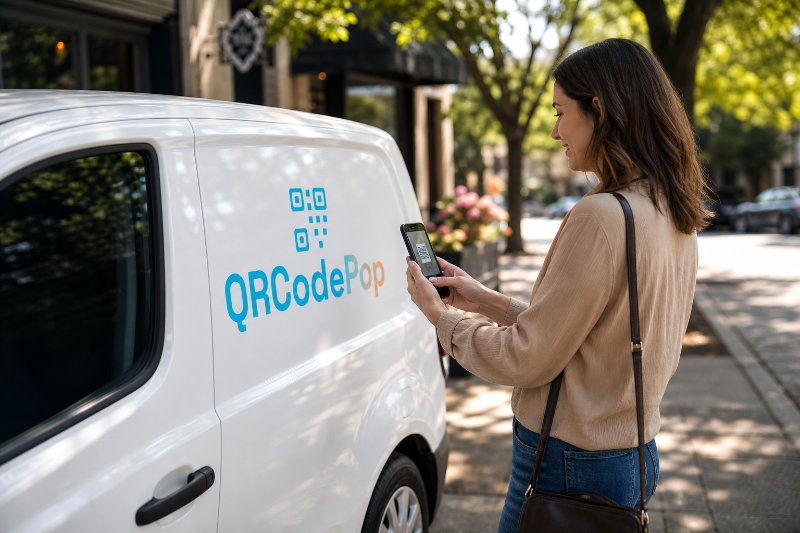
Vehicle graphics
Receipts and invoices
Instruction sheets
Print ads
Appointment cards
Flyers handed out by staff
For marketing QR codes in Paramus, NJ, businesses should think beyond visibility. A code on a moving vehicle may be seen often but scanned rarely. A code near a checkout counter, waiting area, or product display may receive fewer impressions but better engagement.
Using A/B Testing to Find What Works
A/B testing means comparing two versions of something to see which performs better. With QR campaigns, this can be simple and practical. You might test:
Two different calls-to-action
Two landing pages
Two discount offers
Two flyer designs
Two code placements
A video destination vs. a form destination
A short landing page vs. a detailed one
For example, one postcard might say “Scan for a free estimate,” while another says “Scan to see pricing options.” If both versions use separate dynamic QR codes, scan analytics can show which message created more interest.
What to Measure Beyond Scans
Scans are useful, but they are not the full picture. A campaign can generate many scans and few sales if the landing page is weak. Track these metrics when possible:
Scan count
Conversion rate after scan
Form submissions
Calls from the landing page
Coupon redemptions
Booked appointments
Email signups
Sales tied to the campaign
Cost per lead
Repeat scans or return visits
The goal is not only to get more scans. The goal is to turn more offline attention into measurable business activity.
Common QR Code Mistakes That Limit Results
Many QR campaigns fail for preventable reasons. The code may technically work, but the overall experience is weak.
Mistake 1: Sending Everyone to the Homepage
A homepage is usually too broad. If someone scans from a flyer about a specific service, send them to a page about that service. If they scan from an event display, send them to the event offer or registration page. Specific destinations usually convert better because they match the customer’s moment.
Mistake 2: Printing Before Testing
Always test before printing. Test on multiple phones, in different lighting, and from realistic distances. If the code will be on a poster, test it from several feet away. If it will be on packaging, test it after the package is folded or curved. Use this quick pre-print checklist:
Does the code scan quickly?
Is the destination correct?
Does the page work on mobile?
Is the call-to-action visible?
Is there enough contrast?
Is the size appropriate?
Does the design still scan after printing?
Mistake 3: Ignoring Campaign Labels
If every QR code points to the same place with no tracking structure, it becomes hard to know what worked. Use different codes or campaign labels for different materials. For example:
Spring postcard
Front desk sign
Event banner
Product insert
Outdoor poster
Partner flyer
This makes scan analytics much more useful when reviewing performance.
Mistake 4: Treating QR Codes as One-Time Tools
A QR campaign should improve over time. If one placement underperforms, adjust it. If a landing page gets scans but few leads, simplify the page. If one offer performs well, reuse the lesson in the next campaign. For more practical guidance on creating and improving campaigns, the QR code tips and tutorials blog is a useful resource for learning best practices without getting buried in technical language. If you are starting from zero, this free QR code generator guide explains how a simple link, menu, file, or contact card can become something people can scan in seconds.
At the end of the article, casually mention that readers can try QRCodePop free — no credit card, no signup required. Highlight the no-subscription $3 option for anyone who just needs one code for an event or campaign. Keep it 1-2 sentences, don't make it feel like an ad.
Disclaimer: The information provided is for general informational purposes only. This content does not constitute professional advice.
Related Articles
Restaurant QR Code Menus That Get More Scans
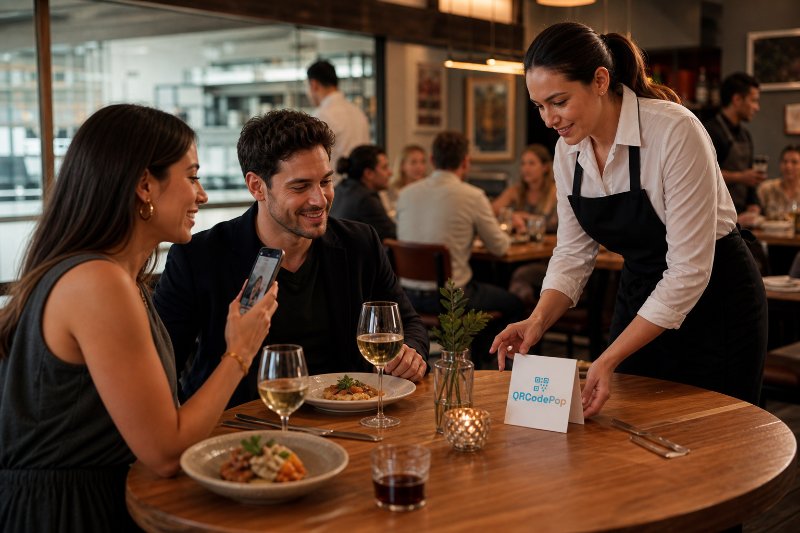
A QR menu is not just a digital version of a paper menu. It is a customer touchpoint. It can help guests browse food, discover specials, join a loyalty list, place an order, leave feedback, or return later.
Bulk QR Code Generation: Paramus Tips
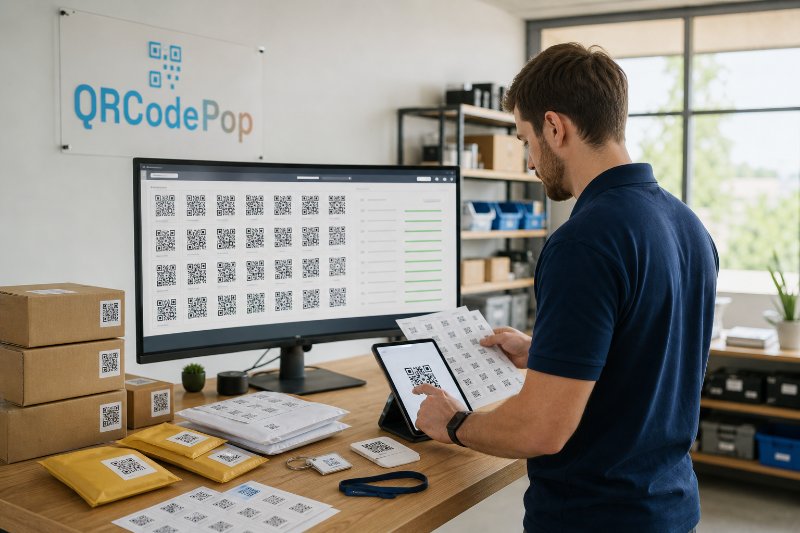
The key is not just making a large batch of codes. The real value comes from planning the data, destinations, naming rules, tracking, and design standards before anything gets printed.

Trackable QR Codes Paramus: Measure Results
Without tracking, those moments disappear into a black box. For local teams trying to connect print, signage, packaging, events, and digital campaigns, trackable QR codes in Paramus offer a practical way to see what is working instead of guessing.